

The Unexpected Benefits of the Pandemic: Discoveries and Reflections
How Early Mornings and a Memorable Book Helped Me See Life Differently
During the pandemic, I discovered some unexpected benefits: my penalty kick improved, I learned to bake banana muffins with crumble, and I found out what five in the morning looks like. This time used to be reserved for breastfeeding or traveling, times when you're either too unhappy or too satisfied to care about the hour.
Another discovery was that you can read at five in the morning. This was non-trivial for me, as reading requires a concentrated energy more suitable for the evening. One of the books I read in those early hours was Jeanette Winterson's excellent memoir, Why Be Happy When You Could Be Normal?.
Winterson broke into the public consciousness in 1985 with Oranges Are Not the Only Fruit. In 2011, she published this extraordinary memoir about an extraordinary girl who grew up in an extraordinary home. You might wonder what relevance the hardships of a lesbian girl adopted by her disturbed Christian mother in 1960s England have for us in 2020 Israel, amidst the pandemic and other troubles. Tolstoy said, "All happy families are alike; each unhappy family is unhappy in its own way." But in reality, unhappy families often share similarities.
Reflections on Unhappy Families
Parents who emotionally hurt their children often do so despite their best intentions. Any detailed portrait of family life involving "parent" and "child" shows a reflection of ourselves and the negative loops we are trapped in. At the center of Winterson's memoir is "Mrs. Winterson," her mother, a woman with fanatical religious beliefs and a questionable grip on reality. The linguistic choice to call her mother "Mrs. Winterson" encapsulates much of the family drama, suggesting an impressive yet larger-than-life figure.
Mrs. Winterson was a large woman, both physically and mentally, described as wearing medical socks, flat sandals, a crimplene dress, and a synthetic headscarf. She was a woman who awaited the apocalypse, feared reading books, and told her adopted daughter that "the devil led us to the wrong cradle." When she discovered her daughter was attracted to women, she summoned an exorcist.
A Door Through Language
Winterson's mother lived in a loveless marriage and adopted her daughter in the hope that this would solve her problems. This expectation was disappointed, as Janet was not the comforting doll Mrs. Winterson needed. Despite beatings and punishments, Janet succeeded where even the devil failed.
What makes Winterson's book truly wonderful is her ability to see her traumatic upbringing from multiple perspectives. Despite her mother's cruelty in the name of God-fearing Christian education, Winterson found a point of contact that allowed her to climb out of her childhood pit: language. Mrs. Winterson forbade her daughter from reading ordinary books but left the act of reading untouched. The Bible was read every evening, and Janet was sent to borrow thrillers from the public library.
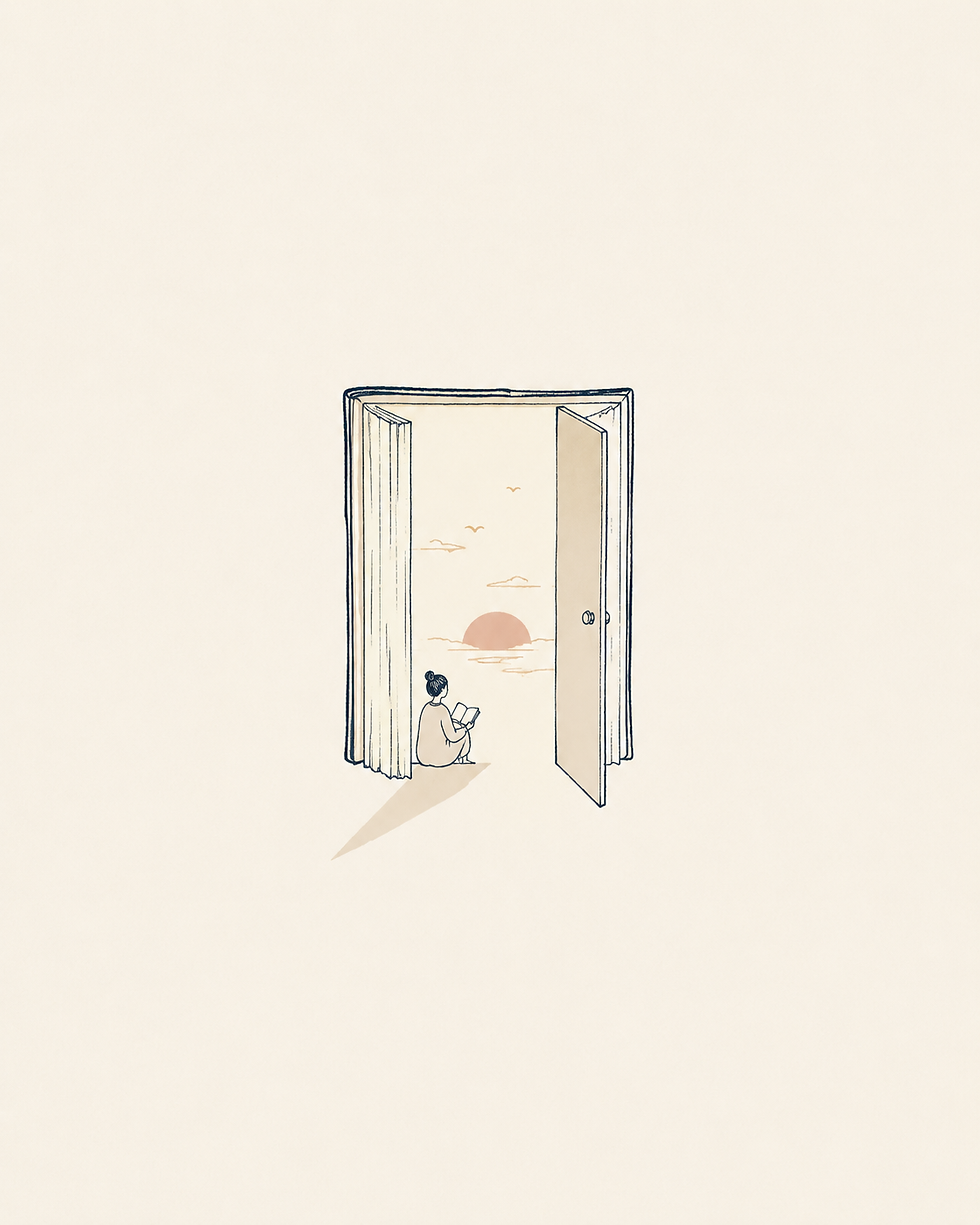
As Winterson put it, "a book is a door." Reading is a door, and language is a door. Her mother could take away any book but not the words in her head. This realization was liberating.
Leaving and Writing
Janet left her mother's house at 16, and writing became a door that remained open for her readers. "I believe in literature and the power of stories," she writes, emphasizing that stories help us speak many languages and reclaim our voices. Unhappy families, she notes, are bound by silence, and there is no forgiveness for those who break it. They must learn to forgive themselves.
Winterson's ability to look compassionately at the mother who hurt her and the power of language to heal wounds is what makes her book impactful. It describes not only the wound but also moves the wounded part from the silent darkness of trauma to the light of language, where it can be treated.
Lessons in Anger and Compassion
Reading Winterson's memoir also illustrates a process related to therapy: the connection between assertive anger, self-compassion, and improved relationships. We often hold back anger, but it can be constructive. Janet's journey involved setting a boundary that separated her from her mother's disorder, which not only saved her but also allowed her to see her mother more humanely.
These components—healthy anger, self-compassion, and compassion for the aggressor—are expressed in the book's subtle humor, giving it unique psychological value. Winterson's belief in the power of stories and language provides a profound lesson in overcoming trauma and finding empathy even for those who have hurt us.