

"Navigating New Normals: The Homeschooling Dilemma in Israel"
"Balancing Health, Education, and Family Dynamics in the Era of COVID-19"
Your article presents a thoughtful reflection on the challenges and considerations surrounding homeschooling in Israel, especially in the context of the COVID-19 pandemic. Here's a revised version with enhanced clarity and detail:
As the new school year approaches, I find myself grappling with mixed feelings about our education system, despite my trust in our leadership. In Israel, like the rest of the world, the education system is caught in a complex dilemma. There’s a tension between parents’ need for childcare to fulfill work and other responsibilities, children’s need for supervision and quality education, and teachers’ need to practice their vocation safely, without risking their or their loved ones’ health. The Ministry of Education is preparing measures, including installing partitions in classrooms - a solution that leaves some, including myself, skeptical about its sufficiency.
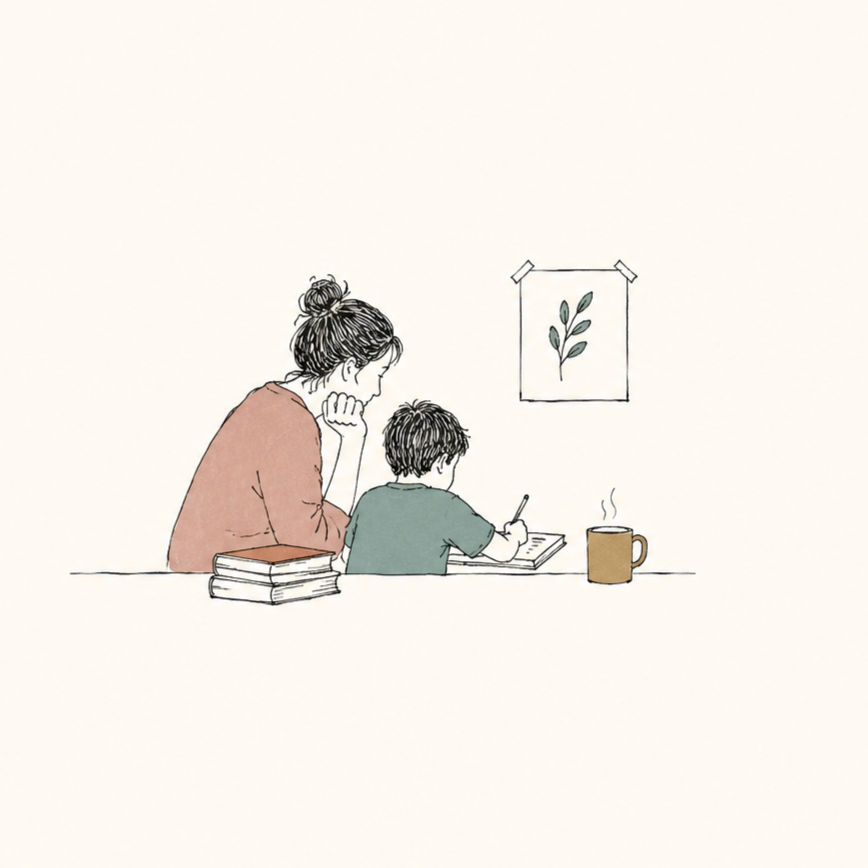
My primary concern isn't just the risk of contracting COVID-19, but rather the potential disruption to our family routine, affecting our work and the children’s education. The extended screen time since Purim, primarily on YouTube, signals an excessive reliance on digital entertainment. This situation led me to consider homeschooling, a concept I once associated exclusively with certain demographics in Israel, where unconventional lifestyles and concepts like “bedtime” prevail.
Delving deeper, I discovered that homeschooling in Israel isn’t limited to any particular socio-economic class, political belief, or unusual lifestyle choices. It's a growing trend across various sectors, offering pedagogical benefits and an escape from the potential instability of the formal education system.
Before the pandemic, my son, a first-grader, encountered a range of texts in school, from the seemingly absurd to classic Hebrew literature like Bialik Verbnitsky's "Sabbath spice" from "The Book of Legend." These texts, while culturally significant, seemed disconnected from his real-world comprehension.
However, during the months away from school, he quickly grasped and explained a newspaper article about a football match. This observation suggests that despite reduced emphasis on traditional subjects, his understanding of language and other academic areas improved significantly.
The rise of homeschooling in Israel predates the pandemic. Although numbers were initially low, the past decade saw a steady increase in homeschooling. A recent report by the "Initiative - Center for Knowledge and Research in Education" highlighted that without significant resources, parents have managed to achieve, if not surpass, the educational outcomes of formal schooling.
Turning to homeschooling is not a simple decision. It involves navigating the depth of its implications and understanding the two predominant approaches: replicating formal schooling at home, and “unschooling,” which rejects traditional educational structures in favor of integrating children into family life and natural learning.
In families like ours, where one parent has a doctorate and the other doesn’t hold a high school diploma, finding a common educational approach can be challenging. The question arises: Which method suits us best?
The shared belief among homeschooling parents before the pandemic was that they should play an active role in their children's education. But with the state seemingly unable to meet educational needs satisfactorily, a new trend, which I term "Corona-Schooling," might be emerging.
As I ponder this shift, numerous questions arise: Is homeschooling right for my child? Can I handle the criticism and ensure quality education? What if the pandemic ends suddenly - would that mean failure? How will this affect my child's social life? And importantly, what should the curriculum include?
The alternative, provided by the Ministry of Education, is hardly appealing - intermittent school attendance or prolonged hours with masks, focused on rudimentary lessons. This stark contrast makes the homeschooling dilemma even more pressing.