

How Not to Apologize
A Guide from Personal Experience
Two weeks ago, I blocked my friend Mira (pseudonym) on WhatsApp. It wasn't a permanent block, but a preventative measure designed to stop me from sending angry messages that would embarrass me the next day.
The message that drove me crazy was, strangely enough, an apology message. Here’s a version of what she sent (details have been changed to protect her privacy):
---
Hey Amalia,
Unfortunately, I'm still at work. I am very sorry for making you feel hurt and can understand why you feel that way. I'm sorry that I put you in an awkward position in front of a relative, especially one close to your heart.
It's important to me that you understand the only reason I haven't brought you your family album yet, despite my good will and affection for you and our friendship, is that I am under enormous time pressure for various reasons, mostly work-related, some health-related (I'm fine but after weeks of investigation).
Despite all this, I was available to your relative whenever she and I arranged to talk. Unfortunately, until our last conversation, she mentioned the family album casually, if at all, and concentrated on other topics. Even when I asked if she needed the album, she didn't seem bothered.
Only in the last week did I understand the urgency from you. In any case, I promise you that by this evening I will find the album and send it to you by courier tonight. Forgiveness and forgiveness.
---
What's My Problem?
Mira and I have been friends for over 20 years. We don’t meet often, but our interactions always feel intimate, safe, and enjoyable. Mira has also helped me at critical points in my life.
But my relative and I urgently need the family album she has, and she knows it. The round birthday for which we need the album is fast approaching, and its absence delays the preparation of the main gift. So, why did this perfect apology message bother me so much? What was I missing?
An Apology Should Focus on the Action, Not the Reaction
Let me tell you about the worst apologist I’ve ever met. She was a relative of mine for a while and introduced me to the fantastic concept: "I’m sorry you were hurt, I didn’t know this was such a sensitive point for you." Wow!
I was in my early 20s then and knew I was encountering something new. It sounded like an apology but felt like an attack. "How did she do that?" I marveled, feeling like I had just seen a model boat in a bottle for the first time.
It took me years to articulate the problem: a true apology focuses on the act that caused hurt, not on the hurt person’s reaction. This subtle weakness in Mira’s apology was hidden in the convoluted phrasing: "I am very sorry for making you feel hurt." If you concentrate, you understand that "I made you feel hurt" shifts the problem to my reaction, not her behavior. The words "I’m sorry I hurt you" would have been better.
An Apology Should Not Induce Guilt
Another clue that Mira's message wasn't a true apology was the guilt I felt after reading it. It was like pouring milk into coffee, only to realize after a few sips that it had expired. Yes, it was a white liquid. Yes, it was in the milk carton. But it left a sour taste.
Mira's message left a sour feeling because a true apology focuses on the damage caused and doesn't overshadow the offender's difficulties. If the offender had valid reasons for their actions, they might not need to apologize at all.
Recently, I tried arranging a playdate for my son. I messaged his friend's mom, but she didn’t respond for several days. When I followed up a week later, she apologized, explaining that her son had been in an accident requiring hospitalization. Short and sweet.
Her use of "sorry" was matter-of-fact and polite. She didn’t feel the need to write an apology letter because she had nothing to apologize for. Mira, however, knew she had something to apologize for, so her focus on her circumstances weakened her apology. In short, either you have nothing to apologize for or you do. If you do, but you word it as if you don’t, the result tastes like sour milk.
An Apology Shouldn’t Include "But"
Initially, I was seething about Mira's apology, thinking she twisted the facts. Her portrayal of my elderly relative’s politeness as a lack of urgency was unfair.
Zooming out, I saw that Mira's focus on the injured party's contributory fault was problematic. An effective apology isn't overly concerned with "who started it." Her long explanation of my relative’s fault was just a drawn-out way of saying "I'm sorry, but…"
An Apology Reflects Recognition and Responsibility
One thing that struck me about Mira’s apology was how hard she tried to make it seem like an apology. Phrases like "unfortunately," "regret," and "apology" were sprinkled throughout.
However, her high and polite language obscured the fact that Mira didn't acknowledge she hadn't kept her word. She didn’t say, "I'm very sorry I repeatedly promised to locate the album and didn't. I'm sorry I made you chase me while I ignored my promises."
An Apology Should Offer a Solution
Mira's apology included a promise to deliver the album that night. I doubted it, and indeed, the album didn’t arrive that night or the next day. Mira didn't address her broken promise or the fact that a third party was also affected.
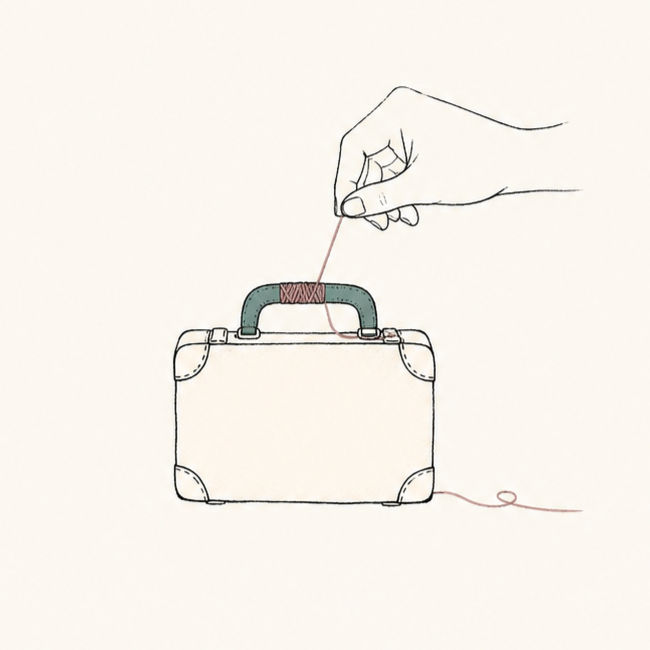
I was disappointed but not surprised because her message wasn’t a true apology. Mira didn't understand that a real apology isn't about buying time or appeasing temporarily. Even a perfect apology is just the beginning. It's the handle of the suitcase that holds the repair needed in relationships.
In a long-term relationship crisis, a statement of intentions regarding a change in behavior or offering a solution has more impact when accompanied by an explanation. For example: "I know I promised not to do this again, but since I started attending a support group, I believe I can keep my word."
---
Now, you can see the importance of a genuine apology. An apology isn't just about words; it's about recognizing the hurt, taking responsibility, and showing a commitment to change.